International Wild Pig Experts Gather in Alabama
By Marlee Jackson
Experts from around the globe gathered in Alabama April 20-22 to discuss Sus scrofa — commonly known as wild pigs.
The Alabama Farmers Federation and Alabama TREASURE Forest Association (ATFA) sponsored the International Wild Pig Conference in Montgomery, which kicked off with an overview of wild pigs’ impact on the Americas.
Dr. Jack Mayer of the Savannah River National Laboratory said U.S. wild pigs create $3.4 billion in damage annually, noting that projection doesn’t fully gauge environmental impacts.
“It’s best to know thy enemy,” said Mayer, who authored the first scientific text on U.S. wild pigs. “The better you know an invasive species, the better chance of controlling or managing that animal or plant.”
Mayer’s historical overview highlighted pigs’ introduction to the Americas by Spanish colonials, eventual status as a game animal in the 1900s, and modern illegal translocation and release.
Mayer said wild pigs are established in 35 states, with a presence in 13 others. The overall population could range from 4 million to 11 million pigs, he added.
Their population hovered between 1 million to 2 million just 50 years ago.
Common wild pig-related issues include rooted land, damaged timber, vehicle collisions, domestic livestock disease, native fauna predation, agricultural crops damage and native game species competition.
Mayer recalled less than two dozen people attended wild pig meetings in ‘70s. More than 150 gathered in this year’s host city. That increase in curiosity, plus new control technology, could move the needle on decreasing sounders — and damage.
“As time moves on, you folks will see some amazing technologies,” Mayer said. “As far as the future, I see there are two choices. The first one is…100% eradication. Give it enough money, enough time and enough resources…and yeah, it is possible. If we don’t do eradication, we have to learn to live with them. Reduce the numbers, you reduce the damage.”
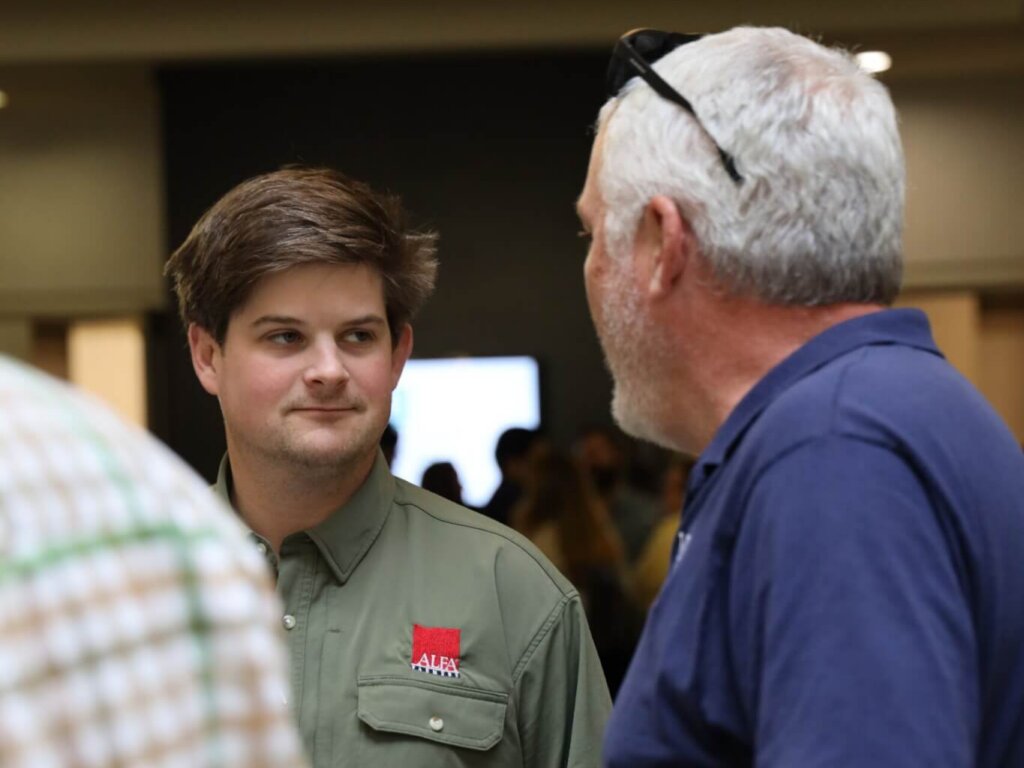
Innovative technologies discussed during the conference ranged from traps and toxicants to robots. The speaker lineup included U.S. Department of Agriculture specialists, land-grant university researchers and experts from Down Under.
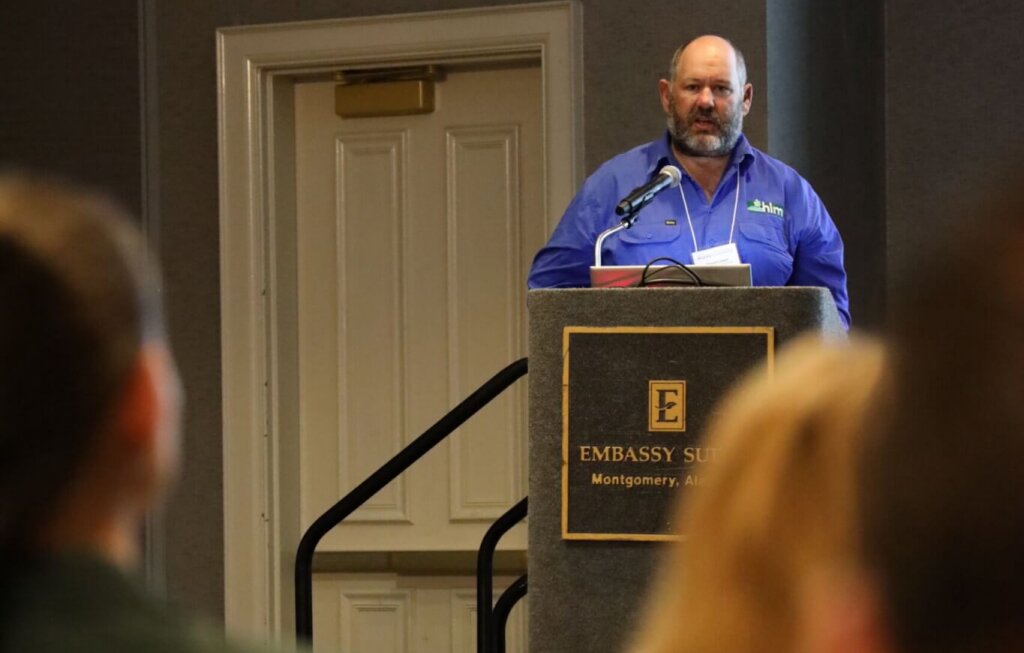
Daniel Lewer works with Hunter Land Management in New South Wales, Australia. He offered an overview of Australia’s wild pig problem, highlighting ways the U.S. can implement lessons learned in his homeland.
“I think the governance, the process, the training, the education is way more important than finding the silver bullet of a chemical (to eradicate wild pigs),” Lewer said.
Fellow Aussie John Scriven of Darling Downs South West Queensland Feral Pig Program reminded attendees that warring with wild pigs is complex.
“With toxins, with traps, with guns, with thermal, the biggest thing is control over a large enough area to impact an abundance and reinfestation rates,” Scriven said. “The key is to implement control as one community, rather than enterprise-based individual control.”
ATFA Executive Director William Green said he was pleased the collaborative international effort took place in Alabama, where farmers and landowners actively encounter and combat wild pigs. Green is also the Federation’s Wildlife Division director and state staff policy adviser for American Farm Bureau Federation’s Wildlife Damage Advisory Committee.
“It’s important we take proactive steps to combat wild pigs in our state and across the globe,” Green said. “We may never eradicate them, but with time, I’m hopeful we can reduce their numbers. That ultimately improves our landscape and positively impacts landowners and citizens everywhere.”