Tuberville Discusses Hurricane Damage With Alabama Farmers
By Maggie Gaddy and Jeff Helms
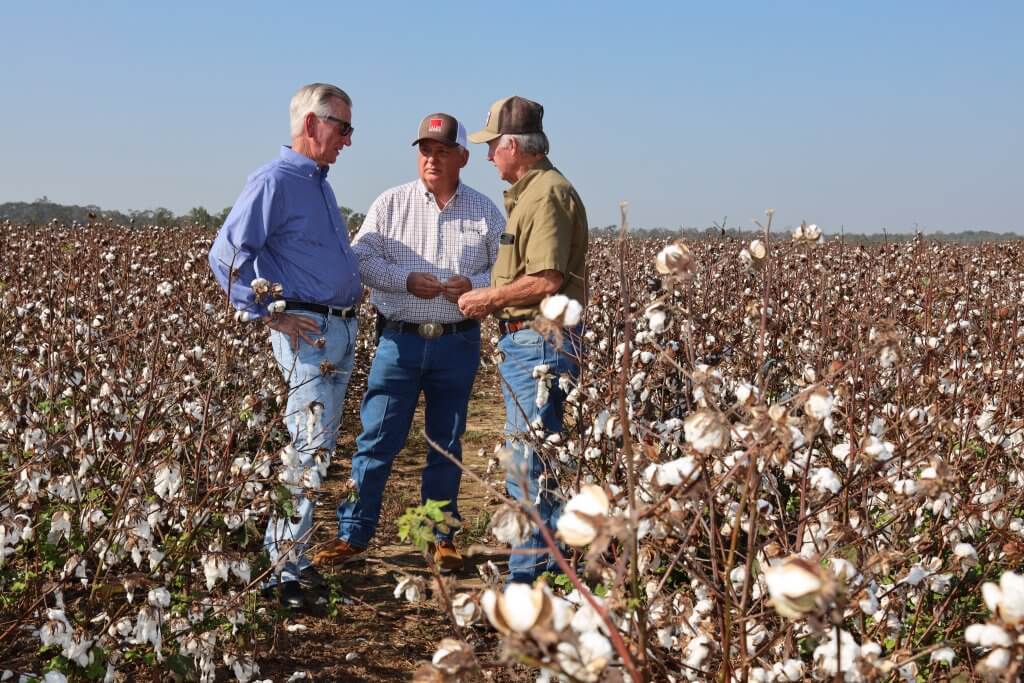
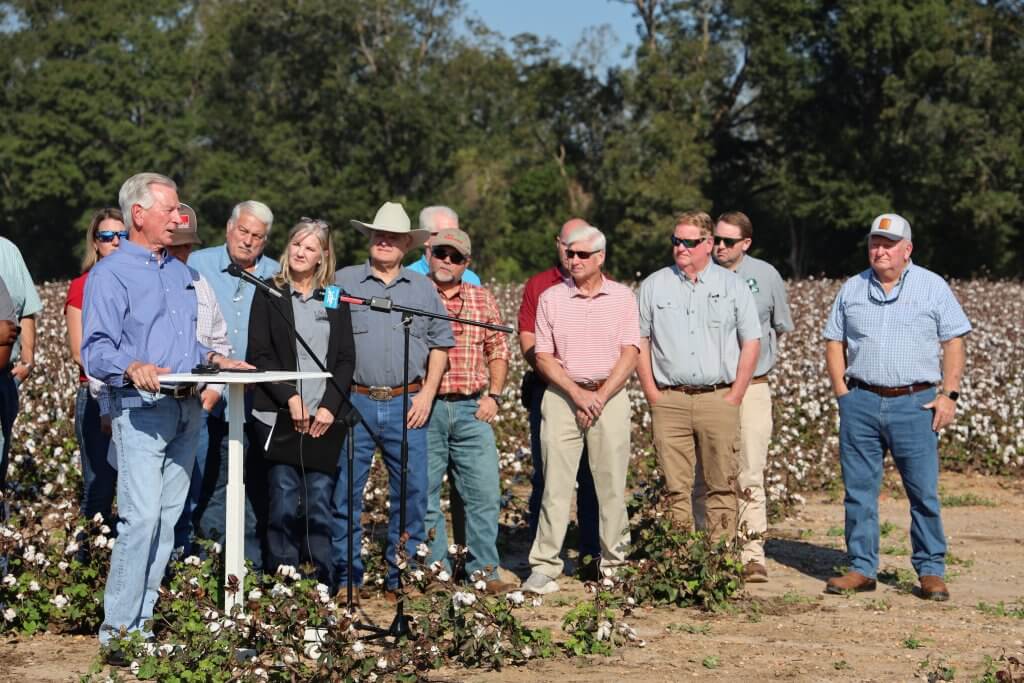
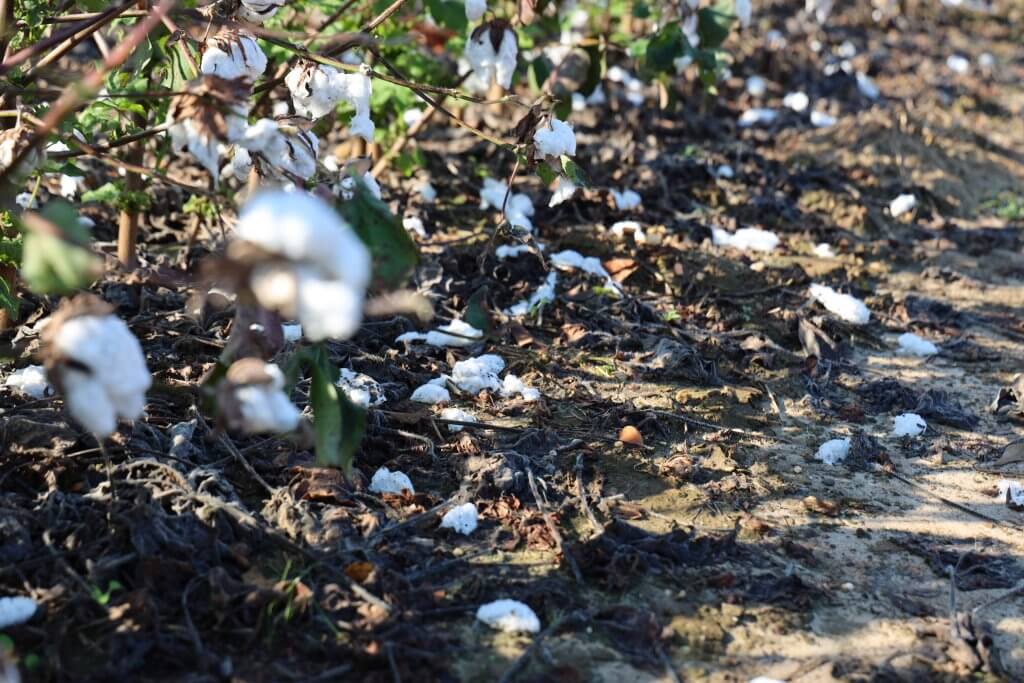
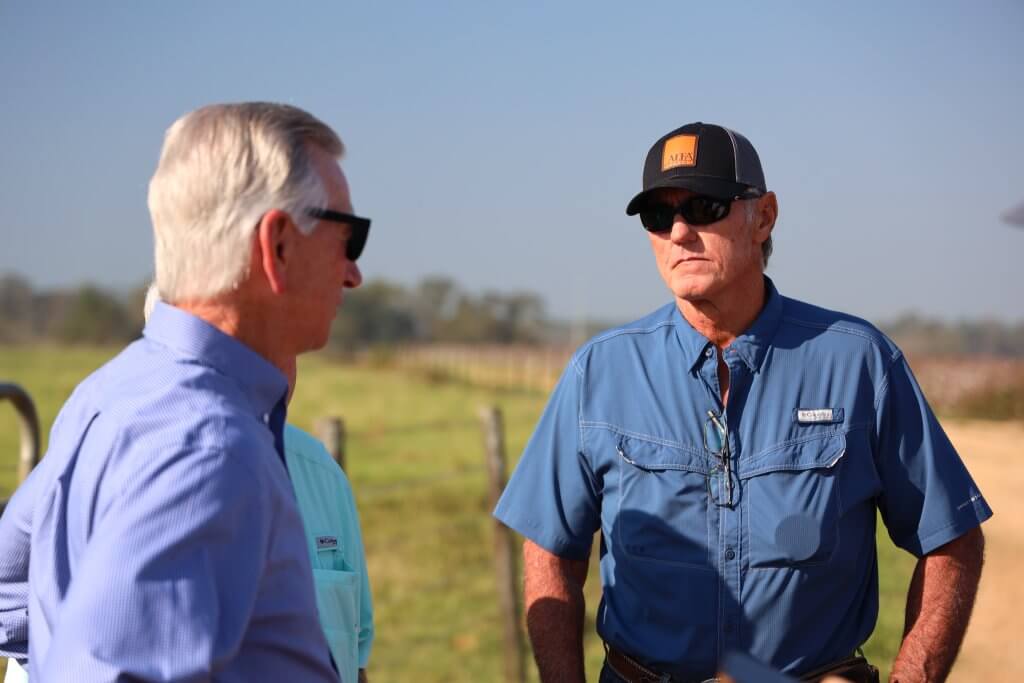
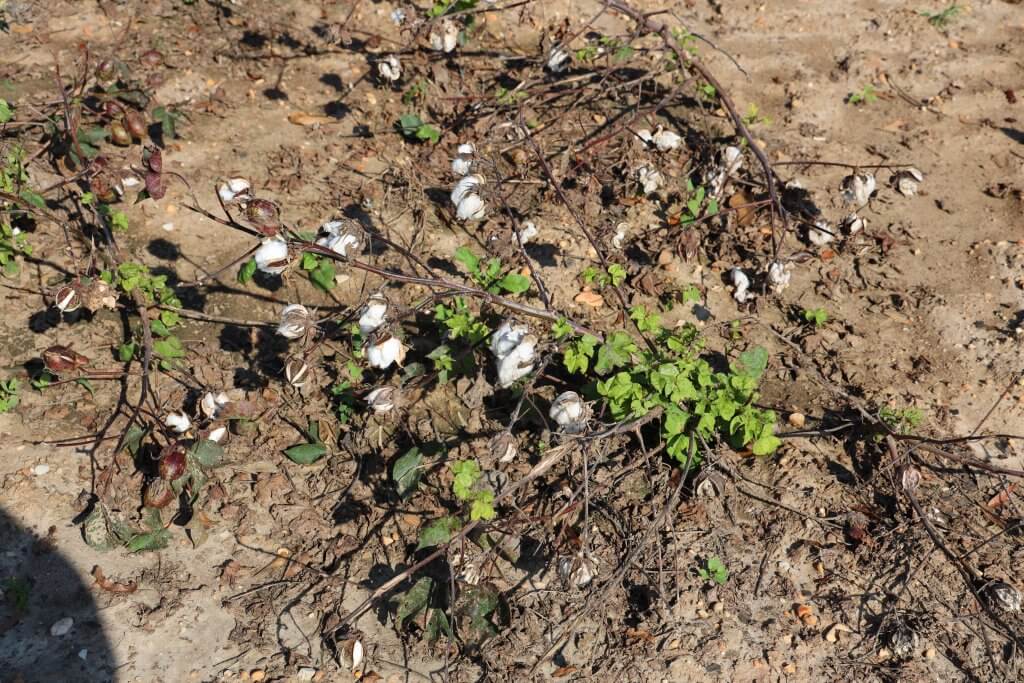
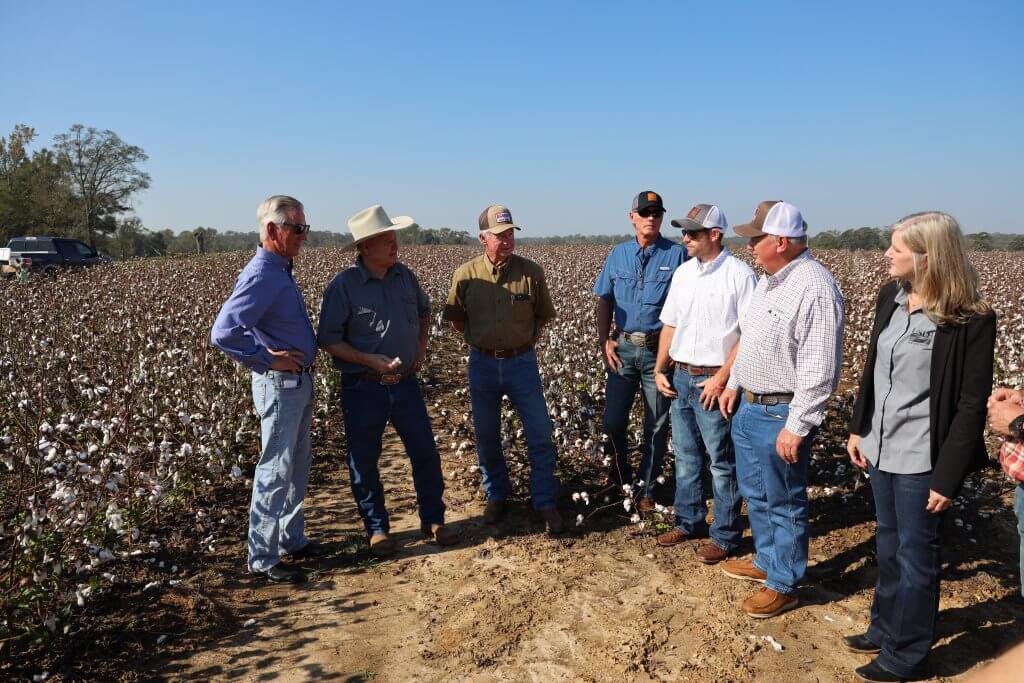
Cotton from a once-bumper crop littered the ground in Conecuh County Oct. 15 as farmers and state officials joined Sen. Tommy Tuberville to assess damage from Hurricane Isaias.
“It’s good to be here on a tough day, but a beautiful day the Lord has given us,” said Tuberville, who is the Alabama FarmPAC-endorsed candidate for governor. “Mother nature sometimes acts in funny ways. Almost a week ago, we had this hurricane come through, and there is a 200-mile path in southern Alabama that has damage.”
Alabama Farmers Federation hosted the tour at Chris and Will Booker’s farm that former Federation Southeast Area Vice President Ricky Wiggins rents for cotton.
Cotton and timber suffered most from the Category 3 storm. Average losses ranged from 20-50% with Conecuh, Escambia and Monroe counties hardest hit. The Alabama Forestry Commission estimates timber damage in the three-county area of over $30 million.
Federation President Jimmy Parnell said there are a number of spots with more damage than others.
“I look at the entire state and feel like we were blessed,” Parnell said. “When talking about hurricanes, you normally see a path of totally destruction. We don’t see that with this one, but where it is bad…it’s bad.”
Parnell said it has already been a tough year for farmers.
“We started with low commodity prices and high input costs,” Parnell said. “It was going to be a challenging year for row crop farmers when we started the year. The hurricane came along and certainly complicated it — it is a significant issue.”
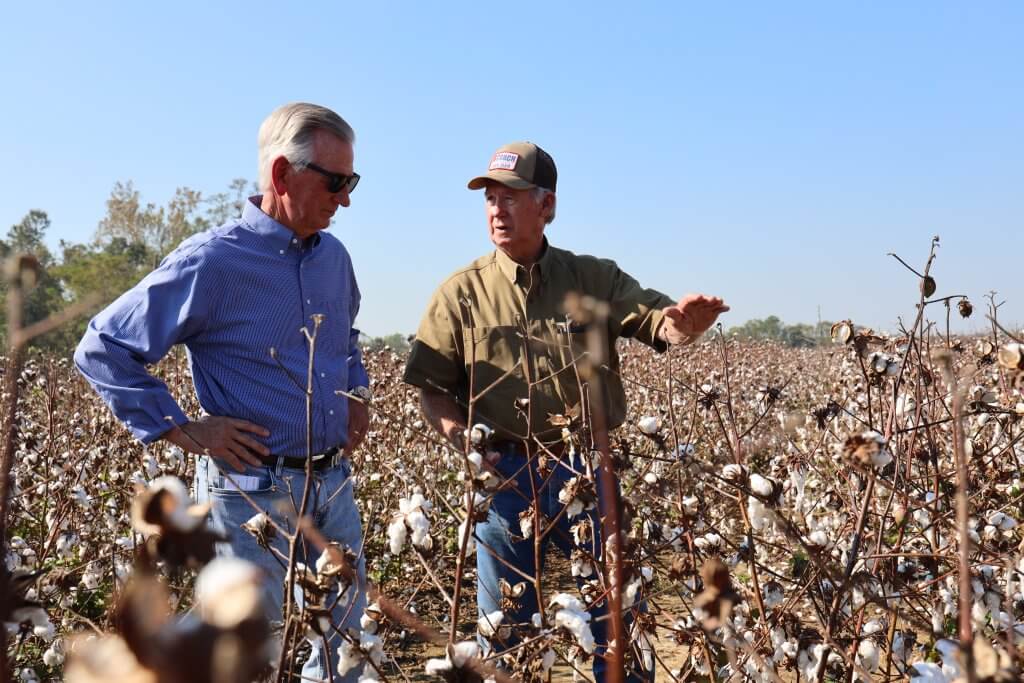
While Wiggins’ cotton field looks good from a distance, he explained powerful wind gusts blew much of his crop to the ground, while other bolls were stunted and will never fully open.
“We had a pretty good-looking crop here, and it got smoked,” said Wiggins, who farms with son Russell and grandson Caleb Fleming out of Covington County. “Being a farmer is a profession you can do everything right, have a good crop and still end up like this. It’s out of our control. The cotton on the ground is of no value. All we can do now is get what is left on the stalk.”
Commissioner of Agriculture and Industries Rick Pate praised the cooperation among state and federal officials in helping farmers when disaster strikes.
“We thank Coach for showing interest in the farming community,” Pate said. “It’s unique in Alabama the alignment we have between farm organizations and agencies. We stand with our farmers.”
Several federal programs have already triggered to help farmers, and a U.S. Department of Agriculture (USDA) disaster declaration is expected soon to clear the way for future help.
USDA Farm Service Agency (FSA) State Executive Director Monica Carroll encouraged farmers to document and report damage.
“Behind every damaged field is a family farm whose livelihood depends on the harvest,” Carroll said. “This administration understands the challenges farmers face between production costs, drought and hurricanes. We appreciate Sen. Tuberville fighting for the farmers-first agenda.”
Carroll said farmers who suffered damage should contact their local FSA office.
Tuberville, who serves on the Senate Agriculture Committee, reiterated his support for farmers and called on Congress to pass a farm bill.
“There’s nothing more important than our farmers, and I have fought six years for agriculture,” Tuberville said. “Farmers grow our food, and the foresters help produce lumber. Today, we see a crop that was almost devasted just a week from harvest. That’s why we need a farm bill — it would improve crop insurance. Our farmers will bounce back. They work 12 months a year to get a crop, but they can’t control the price or the weather.”
Parnell praised Tuberville’s support, noting his accomplishments in the Senate benefiting Alabama farmers, forest landowners and rural families.
“Coach has pushed hard to get a farm bill passed,” Parnell said. “He’s also worked hard getting disaster relief for production agriculture and supported hurricane crop insurance. We are thankful to have him on the farm today to get a firsthand look at things going on.”