Summer Signals Season for Fire Prevention
By Marlee Jackson
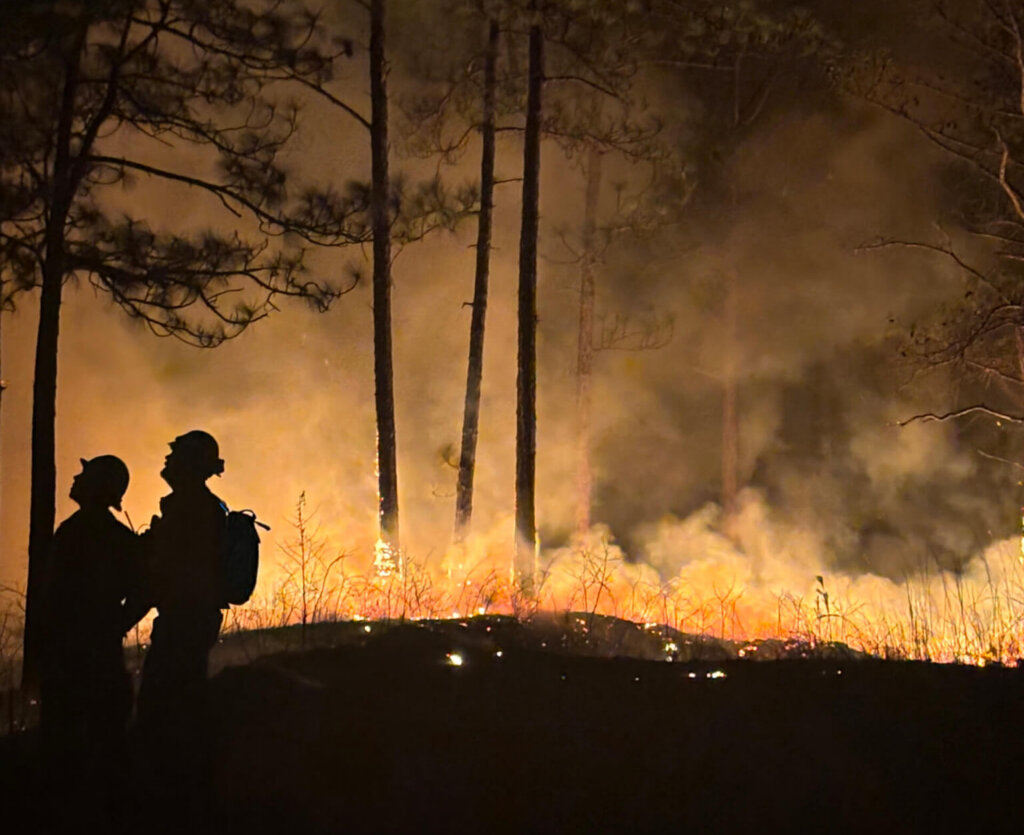
From fighting small fires to battling behemoth blazes, it’s been a busy year for Alabama Forestry Commission (AFC) wildland firefighters.
“With drought loading and lower relative humidity, it’s the perfect recipe for a wildfire,” said Ethan Barrett.
Barrett is AFC’s fire analyst, tasked with monitoring weather conditions, analyzing fire behavior and checking long-range data that lead to safety restrictions, such as fire alerts and burn bans.
With four months left before its fiscal year ends Sept. 30, AFC staff have contained 1,700 fires covering more than 37,000 acres since Oct. 1 — outpacing the previous year when fire ran through just under 34,000 acres.
Tinderbox
Alabama wildfires historically ramp up during early spring and fall dry weather patterns. Fire season then tapers off thanks to spring and summer showers or wet winter weather.
Recent years deliver a different story.
“In the last three years, we’ve transitioned to a drier pattern,” Barrett said. “Every year, we’re seeing a growth in wildfires.”
Lee Ellenburg is Alabama’s state climatologist. His office produces climate summaries, drought assessments and monitoring tools that support decision-making in agriculture, water resources, emergency management, forestry and infrastructure planning.
Alabama is no stranger to dry conditions, Ellenburg said. Continued drought over certain seasons, however, compounds the conundrum.
“What is unique about this drought is it occurred over our recharge season,” he said. “In December to March, we don’t use a lot of water, vegetation is dormant, sun angle is low and there are low temperatures, so we don’t evaporate a lot of water. The rain systems are more scattered, with drizzle days. Those are critical to recharge our deeper soil moisture and reservoirs. We didn’t get that (this winter).”
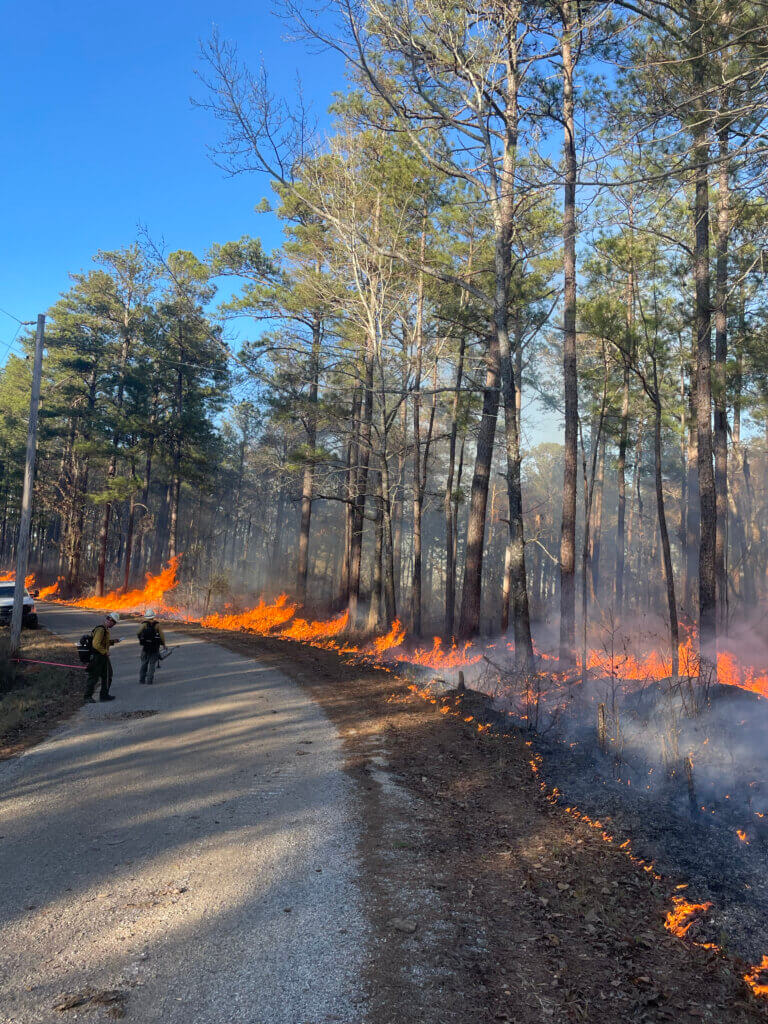
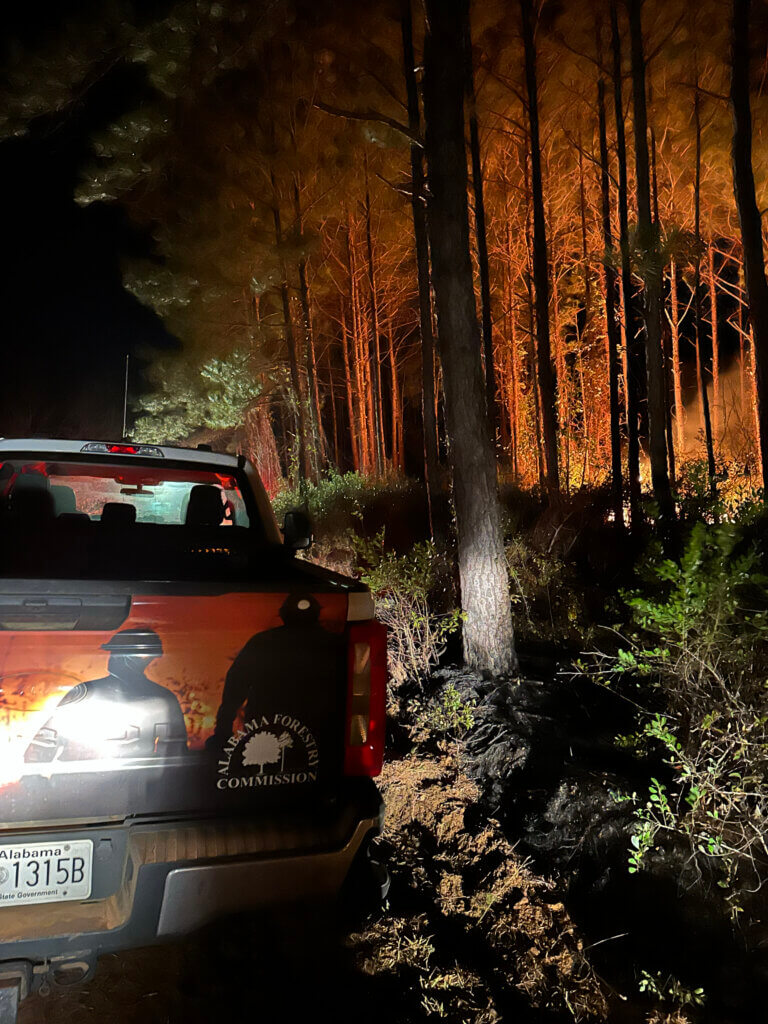
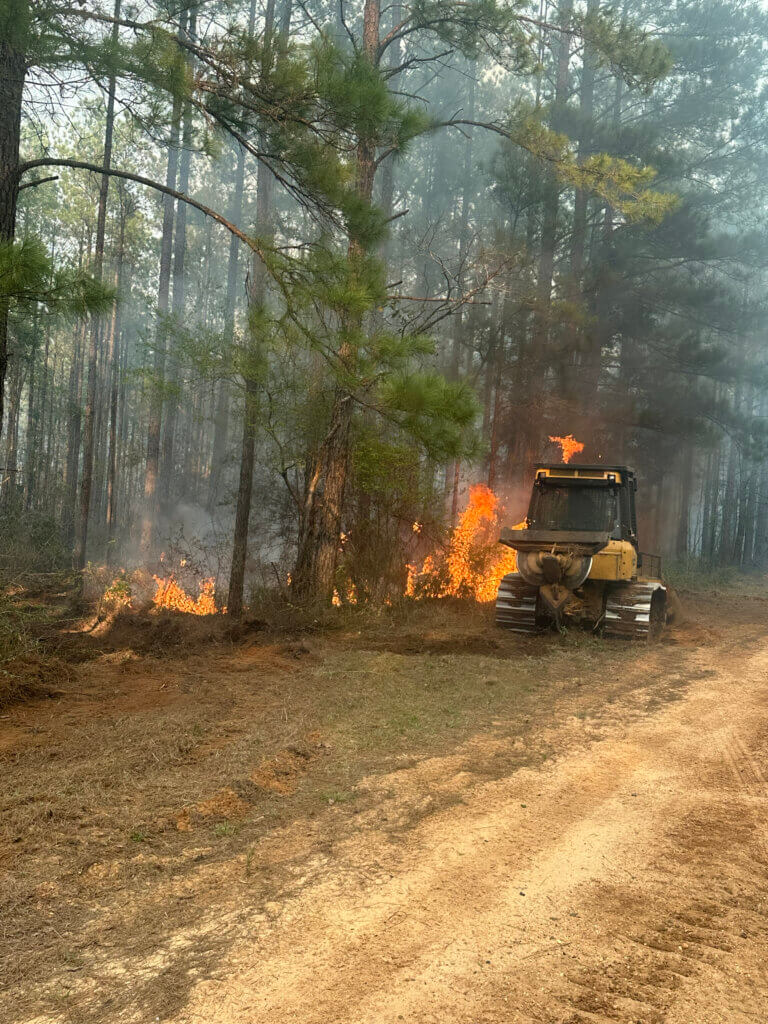
A deeper dearth of soil moisture means the forest fuel load is a tinderbox. Dry needles, leaves and other debris are ready to ignite — or reignite, as embers can smolder and rekindle days later.
Prevention
Following a drier-than-usual spring, showers began popping up across Alabama in early May — a gift of moisture that’s helped reduce wildfires, Barrett said.
While rain can quell fire, property owners play a crucial role in prevention. Wildland fires often spark in rural, heavily wooded areas. Many are in forest land, but structures, such as homes, camp houses and barns, are sometimes close by.
Barrett said simple actions can help prevent or stall fire. AFC’s publication “50 Ways to Make Your Woodland Home Firewise” details those tactics.
“I tell homeowners defensible space is something you do in the off season preparing for fire season,” Barrett said. “You don’t have to change a lot to keep the aesthetics and add safety to your structures.”
Simple strategies include:
- Cleaning the roof and gutters to remove leaves and pine needles
- Installing highly visible house numbers on the house and at the street
- Trimming all tree branches that overhang on the house or are within 20 feet of chimneys
- Moving firewood piles out of a home’s defensible space
- Removing trees along a driveway to make it 12 feet wide
- Pruning branches that overhang the driveway for 14 feet of clearance
- Maintaining a green lawn 30 feet around a house
- Considering replacing conifer and evergreen shrubs from a home’s defensible space
- Installing a hose at least 100 feet long on a rack and attaching it to an outside faucet
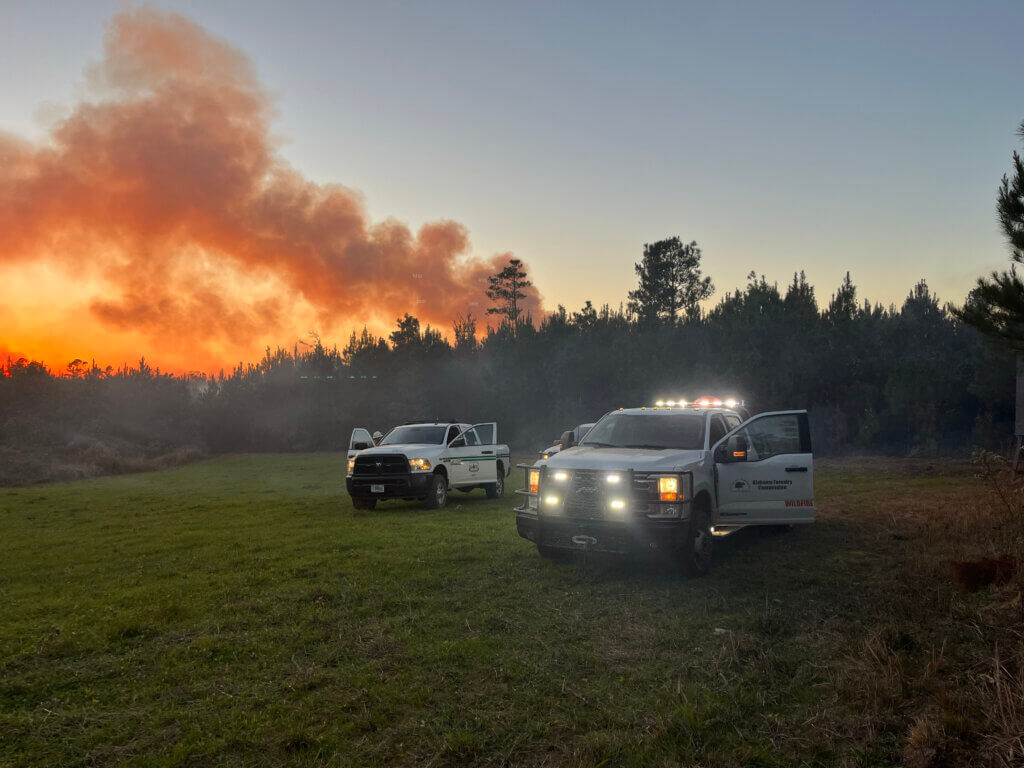
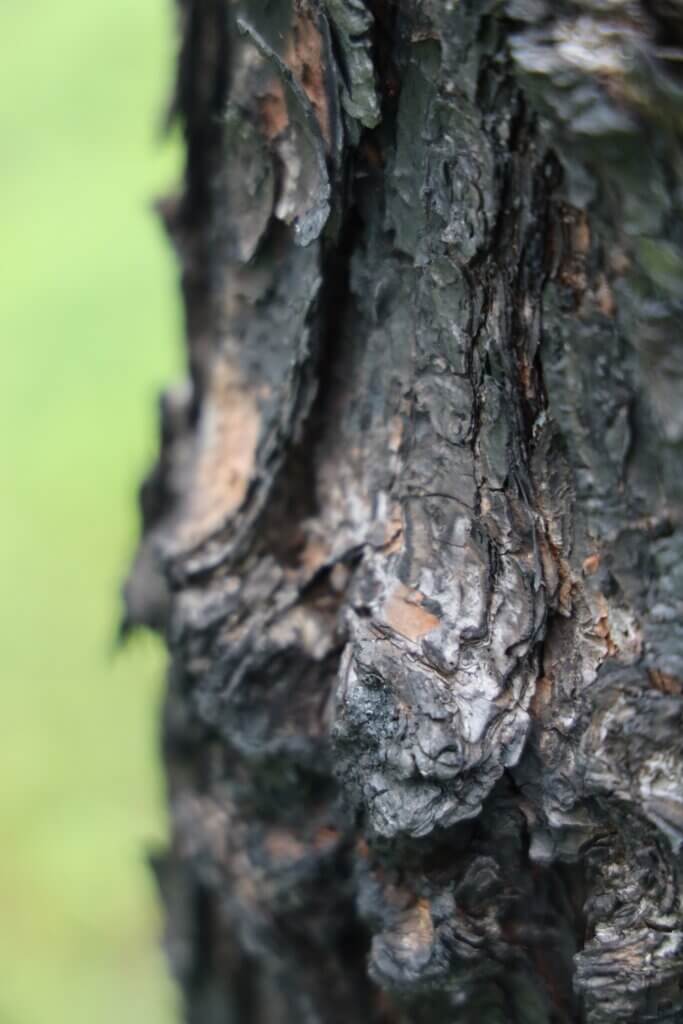
AFC also recommends regularly thinning forest land and incorporating controlled burns to regulate understory debris and fuel load.
“Thinning will help the trees be healthier anyway, even if you don’t have a wildfire,” Barrett said.
Forecast
While May rain helped squelch more immediate wildfire concerns, Barrett said the threat of a summer fire season is still possible.
“If we carry the drought over into June and July, the time you really need to pay attention is when your grasses start turning colors,” he said. “When grass turns yellow, it’s starting to be conducive to fire.”
He urged landowners to check the weather and forestry.alabama.gov before striking a match.
“Hopefully this is a non-issue by then,” he said. “But if we start going into summer not getting the rain and staying in a drought deficit, we will have an above-average fire season in October. That’s the reality. You have the summer months to do what you can to help.”